Friday, June 6, 2014

Friend Grief in New York - Part 2

Book #4 in the New Title Showcase
This post is a bit of a departure from normal posts. It’s a look at what Friend Grief – the blog and the books (the brand, if you will) – was doing at Book Expo America.

I’ve attended BEA before (so I wore comfortable shoes and allocated time for standing in the Starbucks line), but this year was different. I had a very specific purpose for being there and the first ever Author Hub gave me the opportunity to take a big step forward.

The Author Hub was a dedicated area for self-published authors. Over the course of three days, we heard speakers address a variety of business topics (marketing, rights, agents, discoverability). We had room to conduct meetings, meet with other authors, promote our books, read from them and meet eager readers.

My plan for this year was to expand my team. I already have an editor, cover designer and formatter. I went to BEA looking for someone to handle publicity and a website designer. I went there to discuss international and translation rights, as well as determine how best to reach out to libraries.

I’ve exhibited at conferences and conventions before, so when people ask me “how did it go?” my answer is as always: “I don’t know yet.” Yes, some deals are struck on the convention floor. But not all business decisions can or should be made that quickly.

In the short term, though, I accomplished enough to be satisfied:

  1. My new book, Friend Grief and the Military: Band of Friends, got exposure in the New Title Showcase and catalog, and I did a brief reading from it in the Author Hub.
  2. I signed with IPR License, which will handle international and translation rights, as well as large print, audio, serialization rights. I may have them handle permissions as well, so if anyone wants to quote from my books, I can direct them to IPR.
  3. I met with two candidates for publicist and am awaiting proposals from them.
  4. I signed with a new program that will curate and promote self-published e-books to libraries.
  5. I spoke on a panel at uPublishU about building your author platform.
  6. I was offered a speaking engagement.
  7. I found several new outlets for discoverability.
  8. And I turned down the opportunity to work with companies that were either not a good fit or sounded iffy.

There are more things in very early stages that I don’t want to jinx, and a few opportunities that I’ve filed away for future reference. I have a lot of follow-up to do: thank you’s, requests for more information, inquiries. But you’ll notice one glaring omission: I didn’t mention publishers.

Unlike some self-published authors, I did not go there to catch the eye of a traditional publisher. I’m happy doing things the way I’m doing them (despite my lack of patience with the process at times).

Hugh Howey in the Author Hub
As much as the internet has revolutionized publishing and marketing, there is simply no substitute for face time. At BEA you have the opportunity to meet people you’ve only known online (like Shirley Showalter and Orna Ross). You have the chance to see how people interact. That’s a big thing for me: watching people in action gives me a sense of how we might work together. All the while I kept in mind what an agent once told me, “It’s harder to say no to someone you’ve met.”

My disappointments with BEA are relatively minor (like noise level in the Hub, which couldn’t be helped). I was so busy I didn’t get to all the exhibits or educational sessions I wanted to attend. My deepest disappointment is being so busy I didn’t realize Benedict Cumberbatch was there until it was too late.

The important thing is that the Friend Grief series now has a higher visibility. More people will be able to learn about the books and find them easily because of my work at BEA.

My thanks go out to Porter Anderson and BEA for putting together the inaugural edition of Author Hub. I look forward to an even better experience next year.

Wednesday, June 4, 2014

Friend Grief in New York - Part 1

This is the first of two posts this week recapping my experiences in New York City last week. I was primarily there to be part of the Author Hub at Book Expo America (more about that on Friday). But today I want to tell about my first NYC book signing.

Friend Grief and AIDS: Thirty Years of Burying Our Friends grew out of my experience in Chicago’s AIDS community in the late 80s/early 90s. I was a fundraiser, often the only straight person in the room. And though many people asked me why I involved in “that”, I felt a responsibility to do what I could.

An unexpected but remarkable result of writing this book has been meeting men in ACT UP (AIDS Coalition To Unleash Power), some of whom were heroes of mine back in the Bad Old Days. I’ve also met many remarkable men and women who are new(er) to the movement. Their knowledge and passion are humbling.

Sunday night I did a reading at Bureau of General Services – Queer Division, a gay and lesbian bookstore on the lower east side of Manhattan. I put out the word, but you know, it’s impossible to predict who will show up.

At Book Expo, we heard a lot about building a street team: readers who are invested in your success and want to help spread the word about your work. I had that kind of group at BGSQD. Ten men – most around my age – engaged in a deeply emotional, and occasionally funny, discussion.

The premise of my book is that friends made all the difference in the AIDS epidemic (they still do). Friends became the family of choice for those who were abandoned by their ‘real’ families.

The men who joined me were living examples of that premise. They were men who had visited dozens of dying friends in the hospital, papered their refrigerators with photos of hundreds of friends who died, got arrested for demonstrating on behalf of those who were discarded by society.

There were tears and smiles as we discussed the long-term, long-repressed grief that is only recently being spoken of in the community. Why? Why now? I don’t think we came up with a definitive answer. Maybe it’s because many of us are at the age where we begin to take stock of our lives, reflect on what we’ve done and how we got here. Maybe it’s because the increase in new infections has triggered flashbacks of demonstrations and memorial services.

Like military veterans, those of us who were around in the 80s and 90s spoke of it only to each other, and even then, not much. Those on the outside weren’t particularly interested. Just like the VFW and Dryhootch function as safe locations for vets to discuss their experiences, BGSQD served a similar function for those who joined in an almost three hour conversation on Sunday night.

I don’t expect every reading to be so memorable. But I’m grateful to BGSQD and everyone who was there. It was the perfect example of what speakers at Book Expo encourage us to do: build a loyal base of readers who identify with you and want to help you succeed.

Awards are nice, but I’d rather build Friend Grief on events like this one. And I hope you all will come along for the ride.


On Friday: how Friend Grief got noticed at Book Expo

Monday, May 26, 2014

Friend Grief and the Military

It’s Memorial Day, the day we remember those who gave the ultimate sacrifice to preserve our freedom. It’s also the launch day for the fourth book in my series, Friend Grief and the Military: Band of Friends.

Grief is hard. Grief for our friends is often dismissed as unimportant, at least when compared to losing a family member. But friendships forged in the military are different, very different. You’re friends, but more, because your lives depend on it.

In my book, you’ll meet men and women on the front lines who watched their friends die, and carry the trauma of that moment with them for decades. You’ll meet noncombatants – doctors, nurses, chaplains, war correspondents and even a little drummer boy from the Civil War – who struggle with grief and guilt and carrying on.

You’ll learn about moral injury, and how that may be a much bigger story than PTSD. And you’ll learn why the oft-recited statistic of 22 veterans a day committing suicide is shockingly inaccurate.

And because grief also changes people for the better, you’ll be introduced to individuals and organizations who are working with veterans to resolve their guilt, work through their grief and honor their fallen friends.

I struggled with the title. Everything I came up with was too vague or too wordy. So I explain in this excerpt how I made my decision:

The popular mini-series Band of Brothers took its title from what has become known as the St. Crispan’s Day speech in Shakespeare’s Henry V:

                        This story shall the good man teach his son;

                        And Crispin Crispian shall ne’er go by,

                        From this day to the ending of the world,

                        But we in it shall be remembered –

We few, we happy few, we band of brothers;

For he to-day that sheds his blood with me

Shall be my brother…


Since Shakespeare’s time we’ve often heard soldiers, sailors and Marines refer to their battle buddies as “brothers”. Even though it’s somewhat problematic, given the increasing role of women on the front lines, the designation has stuck.

In writings as far back as the ancient Greeks, the relationship between soldiers has been described as comparable to family. A family is a group of people related by blood that functions together with common goals and dependency. “Blood is thicker than water,” right?

In the military, nothing can be accomplished without the trust and dependability of those in the unit. That cohesiveness is the difference between success and failure, life and death, every hour of every day. The bond is stronger than a normal friendship because your lives depend on it. So, when asked why they refer to their friends as brothers, you are likely to get an answer along the lines of “because they mean as much to me as family.” Referring to other soldiers as family members is, from their perspective, the highest compliment.

A similar phenomenon existed in the AIDS community in the 80s and 90s. People with HIV/AIDS – gay, straight, young, old, male, female – were often abandoned by their families. Their friends became their family of choice – of necessity, really – because their lives depended on them.

Conventional wisdom still holds that the bond between family members is normally stronger than that between friends. But I wonder why, considering this quote that’s quite a bit older than Shakespeare’s:


“Greater love has no one than this: to lay down one's life for one's friends.” (John 15:13)


That’s why this book is not titled Band of Brothers or Band of Brothers and Sisters.


This book is titled Band of Friends.


Friend Grief in the Military: Band of Friends is now available for Kindle, Nook and Kobo; paperback version coming soon.

Saturday, May 24, 2014

When the Hero is an Army Nurse

Army Capt. Jennifer Moreno
Most of the people in the military are men. It’s been a tradition for thousands of years, reinforced by societal norms. I’m old enough to remember when the military academies were men-only, and most jobs in every branch of service were restricted to men. Although combat roles are slowly being filled by women, women have been on the front lines for a very long time.

Some of those in danger are noncombatants: medical personnel, chaplains, even war correspondents. The ones included in my book were well aware of their vulnerability. But it didn’t stop them from doing their jobs. Only death could do that.

Army nurse Captain Jennifer Moreno received a Bronze Star posthumously for heroic actions on October 5, 2013. It was a chaotic day: she was killed by the fifth in a series of twelve bombs (detonated by mines) in the Zhari district of Kandahar. Four soldiers were killed and 25 wounded.

Through the years, there have been variations of what is called the Soldiers Creed: “I will never leave a fallen comrade.” That means you do everything humanly possible to come to the aid of a wounded soldier. And you never, ever leave the dead behind.

Moreno was trying to help soldiers wounded in the first four explosions, when the fifth one killed her. It wasn’t until the 11th that Spc. Samuel Crockett (who received a Silver Star for his actions that day) was able to retrieve Moreno’s body the only way he could: with a drag line.

In a eulogy, Captain Amanda King, commander of Moreno’s female Special Operation support team in Afghanistan, wrote: “None of us would have done what you did, running into hell to save your wounded brothers, knowing full well you probably wouldn’t make it back.”

I’m not sure about that. You can look at what Moreno did (you can read a detailed account here) and rationally say “I couldn’t do that.” But in the heat of battle, with the lives of those you care about hanging in the balance, would you just watch them die? Would you forget about your own safety to do your job?

War makes people do things they never would have done before. Some of them are horrific, others are selfless. I think most of us believe that in a similar situation we’d do the right thing, without regard for ourselves.

Jennifer Moreno didn’t have to think long and hard about it. She lived the Soldiers Creed as deeply as any man with a rifle in his hands.

There are other heroes like Moreno: doctors, corpsmen, chaplains. All of them non-combatants, all of them vulnerable, all of them willing to support and protect those who are doing the killing.

So this Memorial Day weekend, let’s remember that not all heroes are armed with weapons.

Some are armed with love.


You can read a more detailed account of Captain Moreno’s heroic actions here.

Friday, May 23, 2014

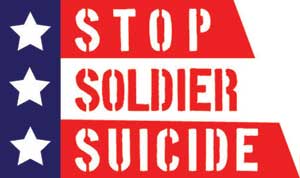
Memorial Day and Stop Soldier Suicide

For the past couple years, we’ve been hearing about the epidemic of suicide among veterans (mostly in the US, though it’s not limited to our country). The statistic most often heard is that 22 veterans commit suicide each and every day: hundreds every month, thousands every year. One active duty soldier also commits suicide every day: more than are killed in action.

In the course of writing Friend Grief and the Military: Band of Friends I was shocked to discover that that number is inaccurate. It came from a Department of Defense study that included data from only 22 states (and before you ask ‘why?’, I haven’t found the answer yet). That means you can reasonably assume that the number is actually closer to 50 a day.

I think everyone agrees that that either number is unacceptable. Why is suicide on the rise for our veterans? That requires a long discussion about family dysfunction, substance abuse, genetics, unrealistic expectations of military life, easy access to guns, PTSD, etc. It’s an important discussion, but for now, I’d like to introduce you to an organization that is doing what they can to prevent more suicides, Stop Soldier Suicide:

While on active duty, our now-CEO Brian Kinsella encountered military suicide firsthand. Within a few months of his first assignment, one of his own Soldiers attempted to take her own life. The suicide attempt was unsuccessful, but it made a lasting impact. Later, a fellow Soldier took his life only days before a deployment and Brian knew something had to be done.

Concerned about the mental health implications of military service and the increasing military Service member suicide rate, Brian, along with two Veteran friends, Nick Black and Craig Gridelli, founded Stop Soldier Suicide in 2010.

Brian Kinsella
Kinsella is a quiet but impressive man, who, along with his friends, is taking a thorough and very thoughtful approach to stopping the epidemic. Theirs is an organization made up of veterans – all volunteer except for the first employee they hired in 2013, COO Brian Buscher, a former Marine.

Theirs is a triage approach, as described on their website:

1. Initial Contact: Active and Veteran Service members contact us through a local chapter, our Facebook page, a 24-hour hotline or chat feature (via our Contact Center coming soon) or other partner organizations.

2. Assess & Triage: We talk with the person or family member contacting us to determine the urgency of the care needed and the right course to take. It’s important for us to understand the situation so we can get the best help available, the RIGHT help, for the Soldier or Veteran.

3. Transition & Follow up: We connect the person in need to one of many resources, whether that be mental health professionals, local chapter support, partner organizations or other resources that can provide care and assistance.

The benefit to this approach is obvious: Stop Soldier Suicide is not the VA or a mental health organization. They partner with government agencies and nonprofits to provide support to those who contact them without long wait times. It’s an independent organization made of people just like those who have reached the point where they believe suicide is their best and only option: It’s made up of veterans who have been there, done that. They speak the same language. That’s critical, because it’s beyond the experience of civilians to truly understand what our veterans have endured.

Memorial Day is not about living veterans. It’s about those who have made the ultimate sacrifice to ensure our freedoms. We honor them on that day, and always should.

But how about if we do everything we can to ensure that our veterans do not take their own lives? How about if we help those who are working tirelessly to reduce that 22-a-day number?

On this Memorial Day weekend, don’t just share pictures of flags and cemeteries on Facebook. Consider donating to Stop Soldier Suicide.

And maybe, just maybe, you’ll help lower that number to zero.

Monday, May 19, 2014

A Bracelet of Honor for His Friends

stripes.com
On Tuesday, President Obama bestowed the nation’s highest award for military valor – the Medal of Honor – on former Army Sgt. Kyle White. When you read this description from Stars and Stripes, keep in mind his age:


White received the nation’s highest award for military valor in recognition of his actions during a patrol in the steep, rugged mountains near Aranas in eastern Afghanistan. He was serving as a radiotelephone operator with C Company, 2nd Battalion (Airborne), 503rd Infantry Regiment, 173rd Airborne Brigade when his team of U.S. and Afghan National Army troops were ambushed on Nov. 9, 2007 by a larger and more heavily armed Taliban force after a meeting with Afghan villagers.

Describing White as “a soldier who embodies the courage of his generation,” Obama recounted how, after being knocked unconscious by an enemy grenade, the young soldier, barely 20 at the time, regained consciousness as bullet fragments spattered his face. Despite his wounds, White repeatedly braved enemy fire to try to save his comrades, including former Spc. Kain Schilling, who was one of White’s guests at the ceremony. Twice during the battle, White used tourniquets, one of them his own belt, to prevent a severely wounded Schilling from bleeding to death.

“I’m here today because of Kyle’s actions. He not only saved my life, but the lives of many others,” Schilling told reporters on Monday.

White also used a radio to help direct air and mortar strikes against the Taliban to keep the enemy at bay.

“Base commanders were glued to their radios, listening as American forces fought back an ambush in the rugged mountains. One battalion commander remembered that ‘all of Afghanistan’ was listening as [White] described what was happening,” Obama said.

After medevac arrived, White made sure that all the other wounded servicemembers were onboard the helicopters before he left, according to Obama.

White, who has been upfront about his battle with PTSD, now has a successful career in investment banking. The war is long over for him.

But as important as the Medal of Honor is to him, there is another piece of metal that he wears every day. Kain Schilling made him a bracelet (and also one for himself) inscribed with the names of their six battle buddies who died that day: 1st Lt. Matthew Ferrara, Sgt. Jeffery Mersman, Spc. Sean Langevin, Spc. Lesgter Roque, Pfc, Joseph Lancour and Marine Sgt. Phillip Bocks.

It should come as no surprise to those of us who have watched these ceremonies that White talked about those men. The hardest thing about coming back, he admits, was finding a new mission. But he also said that whatever he accomplishes in his life, he hopes to make them proud.

To read the Stars and Stripes interview with Sgt. White, including a detailed accounting of what happened on Nov. 9, 2007, click here.


Friday, May 16, 2014

News from Friend Grief

I’m heading into a very busy few weeks – all good! 


If you’re in New York or Chicago, here’s what’s on the calendar:


May 29-31 - Book Expo America, Jacob Javits Center, NYC

I’ll be in the new Author Hub, showcasing a small group of self-published authors. If you’re attending BEA, including Saturday’s Book Con for the general public, please stop by and say hi!

My new book, Friend Grief and the Military: Band of Friends is featured in the New Title Showcase.

May 31 - uPublishU, Jacob Javits Center, NYC

The final day of Book Expo America includes a self-publishing conference, uPublishU. I’m excited to be the only author on the panel “Build Your Author Platform and Publish Successfully”.

June 1 - Bureau of General Services – Queer Division, 83A Hester St., NYC

I’ll be talking and signing the updated edition of my second book, Friend Grief and AIDS: Thirty Years of Burying Our Friends at 7:00pm at this great indie bookstore.

June 7 - Printers Row Lit Fest, Chicago, IL

From 10-2, I’ll be in the Chicago Writers Association tent signing all four of my books. When you purchase Friend Grief and AIDS, Friend Grief and 9/11 and/or Friend Grief and the Military you’ll get a free copy of Friend Grief and Anger: When Your Friend Dies and No One Gives A Damn.

June 14 - Logan Square Public Library, Chicago, IL

I’ll be with a great group of local authors for the “Chicagoland Authors Promoting Success Expo” from 2-4:30. Stop by to hear a very diverse group of writers talk about their work.

Next week here on Friend Grief, you’ll meet some of the terrific people in my new book Friend Grief and The Military: Band of Friends. They’re doing great work to help our veterans.

Stay tuned!