Showing posts with label PTSD. Show all posts

Monday, May 26, 2014

Friend Grief and the Military

It’s Memorial Day, the day we remember those who gave the ultimate sacrifice to preserve our freedom. It’s also the launch day for the fourth book in my series, Friend Grief and the Military: Band of Friends.

Grief is hard. Grief for our friends is often dismissed as unimportant, at least when compared to losing a family member. But friendships forged in the military are different, very different. You’re friends, but more, because your lives depend on it.

In my book, you’ll meet men and women on the front lines who watched their friends die, and carry the trauma of that moment with them for decades. You’ll meet noncombatants – doctors, nurses, chaplains, war correspondents and even a little drummer boy from the Civil War – who struggle with grief and guilt and carrying on.

You’ll learn about moral injury, and how that may be a much bigger story than PTSD. And you’ll learn why the oft-recited statistic of 22 veterans a day committing suicide is shockingly inaccurate.

And because grief also changes people for the better, you’ll be introduced to individuals and organizations who are working with veterans to resolve their guilt, work through their grief and honor their fallen friends.

I struggled with the title. Everything I came up with was too vague or too wordy. So I explain in this excerpt how I made my decision:

The popular mini-series Band of Brothers took its title from what has become known as the St. Crispan’s Day speech in Shakespeare’s Henry V:

                        This story shall the good man teach his son;

                        And Crispin Crispian shall ne’er go by,

                        From this day to the ending of the world,

                        But we in it shall be remembered –

We few, we happy few, we band of brothers;

For he to-day that sheds his blood with me

Shall be my brother…


Since Shakespeare’s time we’ve often heard soldiers, sailors and Marines refer to their battle buddies as “brothers”. Even though it’s somewhat problematic, given the increasing role of women on the front lines, the designation has stuck.

In writings as far back as the ancient Greeks, the relationship between soldiers has been described as comparable to family. A family is a group of people related by blood that functions together with common goals and dependency. “Blood is thicker than water,” right?

In the military, nothing can be accomplished without the trust and dependability of those in the unit. That cohesiveness is the difference between success and failure, life and death, every hour of every day. The bond is stronger than a normal friendship because your lives depend on it. So, when asked why they refer to their friends as brothers, you are likely to get an answer along the lines of “because they mean as much to me as family.” Referring to other soldiers as family members is, from their perspective, the highest compliment.

A similar phenomenon existed in the AIDS community in the 80s and 90s. People with HIV/AIDS – gay, straight, young, old, male, female – were often abandoned by their families. Their friends became their family of choice – of necessity, really – because their lives depended on them.

Conventional wisdom still holds that the bond between family members is normally stronger than that between friends. But I wonder why, considering this quote that’s quite a bit older than Shakespeare’s:


“Greater love has no one than this: to lay down one's life for one's friends.” (John 15:13)


That’s why this book is not titled Band of Brothers or Band of Brothers and Sisters.


This book is titled Band of Friends.


Friend Grief in the Military: Band of Friends is now available for Kindle, Nook and Kobo; paperback version coming soon.

Friday, May 23, 2014

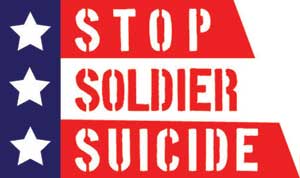
Memorial Day and Stop Soldier Suicide

For the past couple years, we’ve been hearing about the epidemic of suicide among veterans (mostly in the US, though it’s not limited to our country). The statistic most often heard is that 22 veterans commit suicide each and every day: hundreds every month, thousands every year. One active duty soldier also commits suicide every day: more than are killed in action.

In the course of writing Friend Grief and the Military: Band of Friends I was shocked to discover that that number is inaccurate. It came from a Department of Defense study that included data from only 22 states (and before you ask ‘why?’, I haven’t found the answer yet). That means you can reasonably assume that the number is actually closer to 50 a day.

I think everyone agrees that that either number is unacceptable. Why is suicide on the rise for our veterans? That requires a long discussion about family dysfunction, substance abuse, genetics, unrealistic expectations of military life, easy access to guns, PTSD, etc. It’s an important discussion, but for now, I’d like to introduce you to an organization that is doing what they can to prevent more suicides, Stop Soldier Suicide:

While on active duty, our now-CEO Brian Kinsella encountered military suicide firsthand. Within a few months of his first assignment, one of his own Soldiers attempted to take her own life. The suicide attempt was unsuccessful, but it made a lasting impact. Later, a fellow Soldier took his life only days before a deployment and Brian knew something had to be done.

Concerned about the mental health implications of military service and the increasing military Service member suicide rate, Brian, along with two Veteran friends, Nick Black and Craig Gridelli, founded Stop Soldier Suicide in 2010.

Brian Kinsella
Kinsella is a quiet but impressive man, who, along with his friends, is taking a thorough and very thoughtful approach to stopping the epidemic. Theirs is an organization made up of veterans – all volunteer except for the first employee they hired in 2013, COO Brian Buscher, a former Marine.

Theirs is a triage approach, as described on their website:

1. Initial Contact: Active and Veteran Service members contact us through a local chapter, our Facebook page, a 24-hour hotline or chat feature (via our Contact Center coming soon) or other partner organizations.

2. Assess & Triage: We talk with the person or family member contacting us to determine the urgency of the care needed and the right course to take. It’s important for us to understand the situation so we can get the best help available, the RIGHT help, for the Soldier or Veteran.

3. Transition & Follow up: We connect the person in need to one of many resources, whether that be mental health professionals, local chapter support, partner organizations or other resources that can provide care and assistance.

The benefit to this approach is obvious: Stop Soldier Suicide is not the VA or a mental health organization. They partner with government agencies and nonprofits to provide support to those who contact them without long wait times. It’s an independent organization made of people just like those who have reached the point where they believe suicide is their best and only option: It’s made up of veterans who have been there, done that. They speak the same language. That’s critical, because it’s beyond the experience of civilians to truly understand what our veterans have endured.

Memorial Day is not about living veterans. It’s about those who have made the ultimate sacrifice to ensure our freedoms. We honor them on that day, and always should.

But how about if we do everything we can to ensure that our veterans do not take their own lives? How about if we help those who are working tirelessly to reduce that 22-a-day number?

On this Memorial Day weekend, don’t just share pictures of flags and cemeteries on Facebook. Consider donating to Stop Soldier Suicide.

And maybe, just maybe, you’ll help lower that number to zero.

Monday, May 19, 2014

A Bracelet of Honor for His Friends

stripes.com
On Tuesday, President Obama bestowed the nation’s highest award for military valor – the Medal of Honor – on former Army Sgt. Kyle White. When you read this description from Stars and Stripes, keep in mind his age:


White received the nation’s highest award for military valor in recognition of his actions during a patrol in the steep, rugged mountains near Aranas in eastern Afghanistan. He was serving as a radiotelephone operator with C Company, 2nd Battalion (Airborne), 503rd Infantry Regiment, 173rd Airborne Brigade when his team of U.S. and Afghan National Army troops were ambushed on Nov. 9, 2007 by a larger and more heavily armed Taliban force after a meeting with Afghan villagers.

Describing White as “a soldier who embodies the courage of his generation,” Obama recounted how, after being knocked unconscious by an enemy grenade, the young soldier, barely 20 at the time, regained consciousness as bullet fragments spattered his face. Despite his wounds, White repeatedly braved enemy fire to try to save his comrades, including former Spc. Kain Schilling, who was one of White’s guests at the ceremony. Twice during the battle, White used tourniquets, one of them his own belt, to prevent a severely wounded Schilling from bleeding to death.

“I’m here today because of Kyle’s actions. He not only saved my life, but the lives of many others,” Schilling told reporters on Monday.

White also used a radio to help direct air and mortar strikes against the Taliban to keep the enemy at bay.

“Base commanders were glued to their radios, listening as American forces fought back an ambush in the rugged mountains. One battalion commander remembered that ‘all of Afghanistan’ was listening as [White] described what was happening,” Obama said.

After medevac arrived, White made sure that all the other wounded servicemembers were onboard the helicopters before he left, according to Obama.

White, who has been upfront about his battle with PTSD, now has a successful career in investment banking. The war is long over for him.

But as important as the Medal of Honor is to him, there is another piece of metal that he wears every day. Kain Schilling made him a bracelet (and also one for himself) inscribed with the names of their six battle buddies who died that day: 1st Lt. Matthew Ferrara, Sgt. Jeffery Mersman, Spc. Sean Langevin, Spc. Lesgter Roque, Pfc, Joseph Lancour and Marine Sgt. Phillip Bocks.

It should come as no surprise to those of us who have watched these ceremonies that White talked about those men. The hardest thing about coming back, he admits, was finding a new mission. But he also said that whatever he accomplishes in his life, he hopes to make them proud.

To read the Stars and Stripes interview with Sgt. White, including a detailed accounting of what happened on Nov. 9, 2007, click here.


Thursday, July 25, 2013

What Could Be Worse Than A Friend’s Death?

Surviving.

Of course we survive. We wouldn’t be here to grieve our friends if we weren’t alive. Sometimes the depth of that grief takes us by surprise, which is one of the reasons why I started this blog and my books.

But when I started writing about grieving the death of a friend, I didn’t expect to find that survivor guilt plays such a huge role in the lives of many people.

While researching the second book in my series, Friend Grief and AIDS: Thirty Years of Burying Our Friends, I learned that one of the biggest issues for long-time HIV+ men is survivor guilt. Like me, they lost a lot of friends: dozens, even hundreds. But because of luck or timing or a miracle, they’re still here today, some of them HIV+ since the 80s. A friend of mine has lost two partners, but he’s still alive and well. Only now are studies being conducted to assess the long-term effects - both physical and emotional – of being HIV+ for decades.

In my next book, Friend Grief and 9/11: The Forgotten Mourners, survivor guilt shows up not only in those who escaped the towers that day, but friends who were hundreds of miles away, on the phone, begging their friends to run up to the roof, or find a way out through the flames. Dozens of first responders and volunteers committed suicide in the first few years following 9/11; no one can give an accurate count.

And I learned very quickly, in preparing for the fourth book, Friend Grief and Community: Band of Friends, that survivor guilt is a contributing factor to the alarming rise in suicides within the military community (including veterans). It is rightly being called an epidemic, when more active duty military commit suicide than die in combat.

In all those cases – and in more mundane ones every day – people struggle to understand why their friend is gone and they’re still here. They are embarrassed, confused and likely to shut out even the most well-meaning family, friends and counselors. They seek the forgiveness they cannot give themselves, for the crime of being alive. Even those who have earned the Medal of Honor speak mostly of the buddies they could not save.

Losing a friend is hard enough, no matter the circumstances. To feel a crushing despair that can only be eased by committing suicide…that’s a double tragedy.

I’ll share more in the coming weeks about people who grieved the death of a friend. Some of them survived. Some did not. But all will touch you.